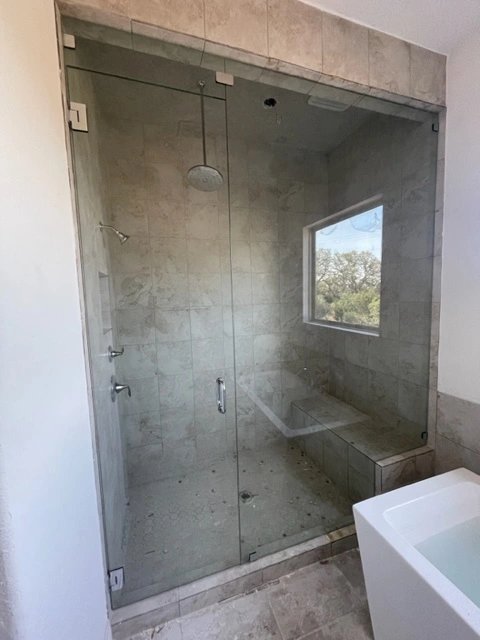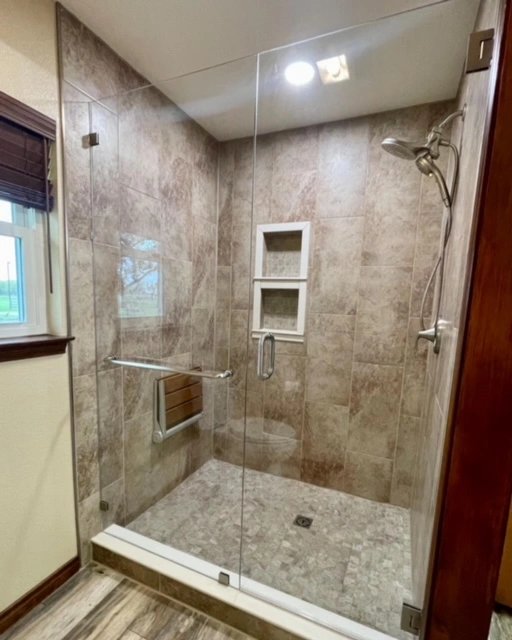
The edge of a glass piece can influence how intentional it looks. For a Central Texas home project, discuss that detail early when the edges will remain visible. A tabletop, shelf, mirror, and shower panel each place the edge in a different relationship to the surrounding space.
Begin with the intended application. Explain whether people will regularly reach near the edge, whether it is enclosed by another component, and how it will be viewed. Those conditions belong in the fabrication discussion. Avoid selecting an edge treatment from a photograph without reviewing its suitability for the project.
Ask which appearances are available. Product names can vary, so examples or samples may communicate the desired look better than a label alone. Review how the edge relates to the piece’s shape and nearby furniture. A decorative detail that works on one item may feel out of place on another.
Consider the glass thickness and overall design together. Edge appearance is not an isolated choice that overrides the requirements of the application. Ask the installer to explain the complete specification, including any support or hardware involved. The finished piece should be reviewed as one coordinated design.
Clarify how custom shapes will be measured and approved. Rounded corners, curves, or unusual outlines may require a more detailed process than a simple rectangle. Do not assume an informal sketch communicates every fabrication detail. Ask what drawing, template, or measurement method is needed for your piece.
Finally, include the agreed edge appearance in the approved scope and request care guidance. Modern Glass offers custom glass projects across its listed Central Texas service areas. Showing the surrounding room and explaining how the piece will be used helps turn an edge preference into a useful design discussion. The visible details deserve attention because they contribute to the installation’s appearance.